Hamsters can't speak, so how can we understand them? Actually, they express their feelings without you even noticing. Observe their body language to get to know them better! Here's what different behaviors mean:
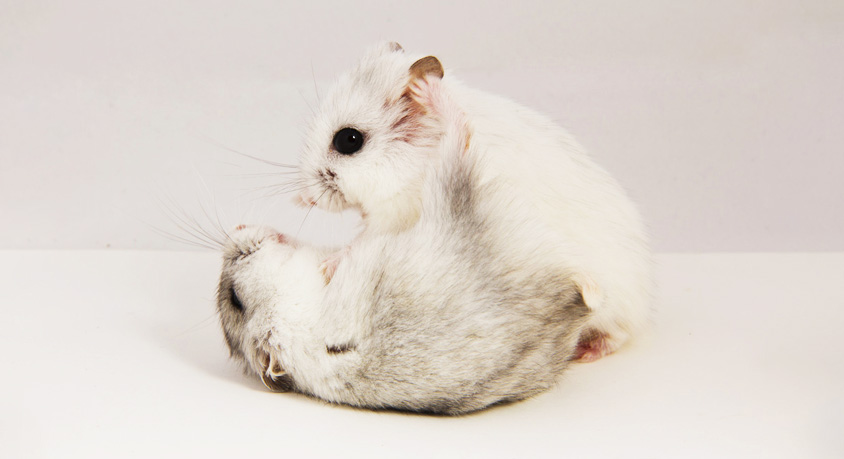
When relaxed. Grooming their fur: Hamsters groom themselves in two situations. -- The first is when they're relaxed. -- The other is after being petted by their owner, when they want to reapply their scent to their fur. Hamsters love their own smell!
Ears Flattened: When a hamster's ears are down, it indicates low alertness and a relaxed state. When alert, their ears are typically perked up, highly sensitive to even faint sounds in their surroundings. Since hamsters have poor eyesight, they rely on their keen little ears to compensate!
Lying Flat on the Floor: Seeing them sprawled out lazily shows they feel completely at ease! Many hamsters sleep this way.
Curled up: When hamsters are fast asleep, they curl into a ball. If you see them like this, it's best not to disturb them!
On alert. Crawling low to the ground: Sometimes when hamsters are out of their cage playing, they'll move with their bodies pressed close to the floor. This means they're on high alert, especially in unfamiliar places. At the slightest sign of trouble, they'll dash away at full speed.
Standing upright with front paws forward: This is usually a sign of curiosity. They stand tall to scan their surroundings for potential threats or to scout for tasty treats approaching.

Nose twitching constantly: As mentioned earlier, hamsters have poor eyesight, so they rely on hearing, touch, and smell to compensate. When their nose twitches nonstop, it means they're actively investigating their environment.
When stressed: Pacing in circles. Don't assume it's funny when your hamster constantly walks the same route—it's actually a sign of stress. When feeling anxious, they'll pace back and forth along the same path. If you notice this behavior, pay extra attention!
Frantic wheel running: Some hamsters release stress and frustration by running frantically on their wheel. So don't assume wheel running is just routine—it's your hamster telling you something's bothering them.
When angry. Back-arching and squealing: Hamsters adopt this defensive posture when threatened. Sometimes owners startle them by suddenly reaching into the cage. They also back-arch and squeal when threatened by cage mates. Since they lack specialized defenses, they rely on intimidating displays to scare off adversaries.
Standing up with front paws raised: This signals “I dislike this place and want to escape!” If observed in their nest, owners should pay closer attention.
When making requests: Chewing cage bars: Beyond teeth grinding or boredom, hamsters use this behavior to express needs—like wanting playtime or treats.
When happy: Climbing onto hands: When in a good mood, hamsters may climb onto their owner to seek affection. If you gently call its name while reaching into the cage and it climbs onto your hand, it likely means they're feeling cheerful today!
As an owner, reviewing this information should help you better understand your hamster. If your hamster shows signs of distress, promptly identify the cause to ensure it has a happy living environment.