My friend Zoe fell hard for sugar glider TikTok reels—tiny marsupials gliding into owners’ pockets, cuddling like living keychains. She splurged on a single glider named Nala, convinced the “pocket pet” would fit her busy NYC lifestyle. Three months later, she found Nala chewing her own tail, a desperate behavior vets call self-mutilation. “I thought she just needed a cage and food,” Zoe said, tears in her eyes. “I had no idea she’d die of loneliness without a companion.” That’s the sugar glider paradox: they’re marketed as low-effort pocket pets, but in reality, they’re hyper-social marsupials that need constant companionship to survive—no exceptions.
In the wild, sugar gliders live in colonies of 10-15 members, grooming, gliding, and sleeping together in tree hollows. They’re wired for nonstop interaction; isolation triggers severe stress, according to Dr. Maya Carter, an exotic animal vet. “Sugar gliders don’t just get sad alone—they develop neurotic behaviors: over-grooming, tail-chewing, even refusing to eat,” she explains. Zoe’s Nala was kept solo in a small cage, with no other gliders to bond with and limited human interaction (Zoe worked 10-hour days). By the time Zoe realized something was wrong, Nala’s tail was permanently damaged, and she needed antidepressant medication to stop the self-harm.
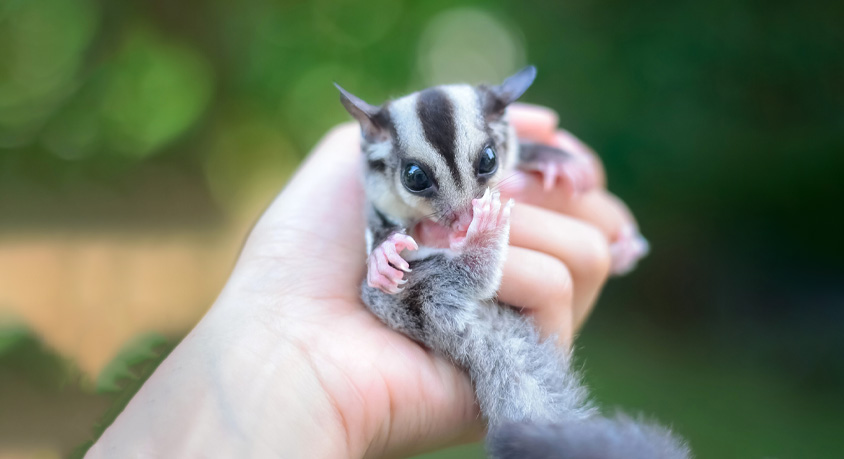
The myth of the “single sugar glider pet” is pushed by breeders looking to make a profit, but reputable exotic pet organizations warn against it. Gliders need at least one same-species companion (a bonded pair or group) and daily human interaction—2+ hours a day—to stay mentally healthy. They also require large cages with space to glide (minimum 2x2x3 meters), not tiny “pocket pet” enclosures. Zoe eventually adopted a second glider, Kovu, for Nala, and within weeks, the self-mutilation stopped. “They sleep curled up together now,” Zoe says. “I was so selfish to keep her alone—I thought she was a toy, not a living creature that needs family.”
Sugar gliders are often sold with false promises: “they bond to humans like dogs” or “they’re fine alone if you play with them.” But Dr. Carter says human companionship can’t replace glider-to-glider interaction. “Their social needs are hardwired—you can’t train a glider to be happy alone, no matter how much you cuddle them,” she adds. Even bonded pairs need enrichment: gliding toys, foraging puzzles, and time outside the cage to mimic their wild habitat. Without it, they still develop stress-related issues.
Zoe now advocates for sugar glider education, warning others about the “pocket pet” lie. “They’re not accessories—they’re social animals that deserve a colony, not a pocket,” she says. If you’re considering a sugar glider, skip the solo purchase and commit to a bonded pair, a large cage, and daily interaction. Otherwise, you’re not adopting a pet—you’re sentencing a marsupial to a life of loneliness and self-harm. The cute TikTok reels omit this harsh truth, but every sugar glider owner needs to hear it: pocket size doesn’t mean pocket-sized needs.