My friend Lars has a cat named Bjorn that looks like a tiny Nordic lion: thick double fur, tufted ears, and paws big enough to grip ice—he’s not just a pet, he’s a living link to the Vikings. When I first met Bjorn, he was perched on Lars’ bookshelf (a 6-foot climb he made in seconds), staring out the window like he was guarding a Viking longship. That’s the magic of the Norwegian Forest Cat (NFC): these cats aren’t just fluffy companions—they’re survivors with a 1,000-year backstory that starts on Viking farms and ends on your living room sofa. Let’s unpack their epic journey from Norse shipmates to modern house cats.
First, let’s set the scene: 8th-century Scandinavia. Vikings called these cats “skogkatt” (forest cat), and they were prized for two jobs: protecting grain stores from rats (critical for survival in harsh winters) and sailing on longships to keep pests off supplies. Their biology is built for the Nordic wild: a waterproof top coat, dense undercoat that repels snow, and tufted paws that grip ice like snowshoes. Unlike delicate house cats, NFCs evolved to hunt in forests and endure subzero temperatures—traits that made them indispensable to Viking communities. Legend even says they were companions to Norse goddess Freyja, who rode a chariot pulled by cats (likely skogkatts).
Fast forward to modern times: these once-feral forest cats transitioned from farm mousers to beloved pets in the 20th century, officially recognized as a breed in 1977. Bjorn embodies every skogkatt trait: he’s fearless (once chased a squirrel up a tree in Lars’ backyard), climbs like a pro (Lars installed cat shelves to satisfy his need for height), and has a thick coat that sheds heavily in spring (hence the weekly grooming sessions with a long-haired brush). What surprises most people? Their gentle, loyal personalities—Bjorn follows Lars around the house, curls up with his kids at bedtime, and even plays fetch (a trick Lars taught him with a Viking-themed toy mouse).
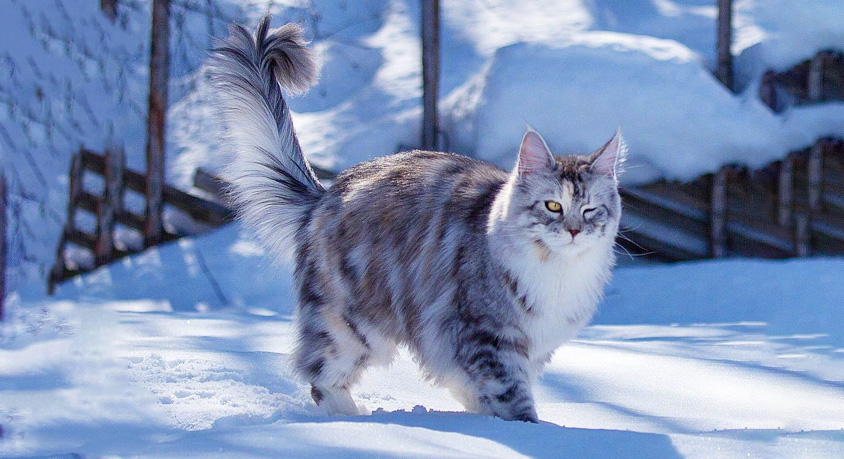
Lars likes to joke that Bjorn “still has Viking blood”—he hates being cooped up, loves exploring the backyard (even in snow), and has a knack for “guarding” the kitchen counter from crumbs (his modern-day “grain stores”). Unlike some purebred cats, NFCs are hardy and adaptable, thriving in apartments as long as they have vertical space to climb (a nod to their forest-dwelling ancestors). They’re also smart: Bjorn learned to open cabinet doors to steal treats (Lars had to childproof them) and responds to his name with a chirp—traits that make them feel less like pets and more like family.
The NFC’s journey is a story of resilience: from surviving Norse winters to sailing across oceans, they’ve adapted without losing their wild heart. Today, Bjorn spends his days napping on a Viking-themed bed (Lars’ nod to their heritage) and chasing laser pointers like they’re forest prey—but he still has that same fierce, loyal spirit that made his ancestors Viking allies. For pet lovers who crave a cat with character (and a cool backstory), the Norwegian Forest Cat is more than a pet—it’s a piece of Nordic history curled up on your sofa.
These cats prove that some of the best companions have the most epic pasts. From guarding Viking grain to snuggling with modern families, the skogkatt’s journey is a reminder that even the fluffiest house cats can have wild, legendary roots.