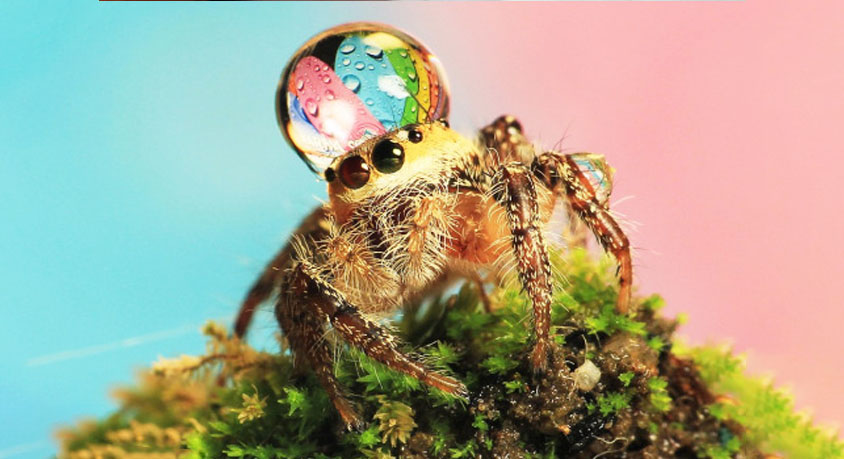
People often ask me why their spider looks “lazy.” They picture them as tiny action heroes leaping around all day, but anyone who has spent real time watching a spider knows most of the exciting stuff happens when you’re not paying attention. I’ve caught my own spiders doing their most dramatic web-building sessions at 3 a.m., right when I’m getting up for a glass of water. It’s a strange feeling—like walking in on a roommate rehearsing choreography they’d never admit to practicing.
One of the quirkiest behaviors is molting. The first time I saw it—this was sometime around early 2020—I thought the spider had died. It was lying on its back, legs slightly curled. I panicked, even grabbed my phone to Google what a “dead spider posture” looks like. A few minutes later, I realized it was mid-molt. That slow emergence—every joint sliding out of a tight old shell—still feels almost uncomfortable to watch, like intruding on something deeply private. After a molt, they look softer, colors brighter, sometimes a little wobbly. That’s when I keep the enclosure quiet and skip feeding for several days. They need time to harden up; it’s one of the few moments when spiders truly seem fragile.
Web making is another part of their secret routine. Some species barely decorate, while others turn a terrarium into an abstract installation piece. I used to think the messier webs meant a stressed spider, but many just build in layers. I once placed a cork bark hide in a slightly crooked angle, and the spider turned the space behind it into a hidden tunnel network that must have taken hours. I didn’t notice until I saw a cricket vanish without a trace. A faint vibration through the bark told me the spider was somewhere in that invisible webbed hallway. These webs work as tripwires, chairs, communication lines—so many tiny purposes woven into a structure that most humans overlook.
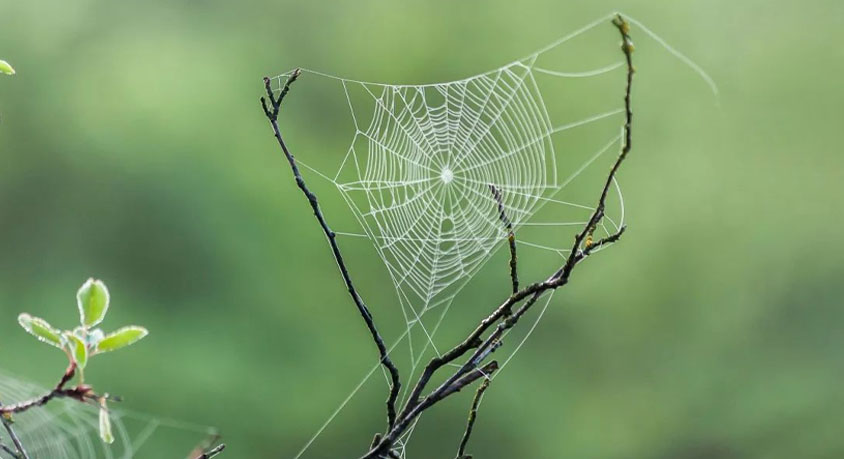
Their nighttime habits make them feel like they’re living parallel lives. During the day they sit still, barely moving except for subtle leg adjustments. But leave a red-spectrum night light on, and suddenly you catch them pacing, climbing, inspecting their theme-park of tunnels and platforms. I’ve sat beside an enclosure on a quiet evening, watching a spider circle the same corner as if performing security rounds. Once, during a particularly warm summer night, a usually calm terrestrial species climbed halfway up the glass, paused, and then returned to its hide like it had forgotten why it started the journey.
When it comes to human interaction, spiders don’t bond in a typical way, yet they learn the rhythm of your presence. My spiders tend to stay calm when I open the enclosure slowly and avoid sudden shadows. I’m not claiming they “recognize” me, but they respond differently to predictable behavior. A spider that bolts at sudden movements can remain perfectly still if I move with slow, steady hands. In that small sense, keeping spiders feels less like managing a pet and more like learning how not to disturb a creature that operates on delicate instincts.
A digital habitat monitor helps me keep their environment stable, though the spider never shows gratitude for perfect humidity—just fewer dramatic retreats into the hide. They communicate in their own silent language: the angle of a leg, the speed of a step, the decision to web a certain corner more heavily. You start noticing patterns after enough mornings checking the enclosure with half-open eyes.
Spiders might not wag their tails or chirp, but they interact through these tiny, subtle signals. The more time you spend observing them, the more you realize their calm exterior hides a life full of quiet rituals. They’re not mysterious monsters; they’re private little architects, night-shift workers, and occasional escape artists—all wrapped in eight legs and a patience level I wish I had.
Living with spiders feels like sharing space with a creature that has its own schedule and rules. And once you start picking up those patterns, the fear fades and curiosity takes over. After all, half the fascination comes from knowing there’s always something happening just out of sight, waiting for the moment you’re not looking.